Dandruff vs. Dry Scalp: The Real Difference & How to Treat Them Right
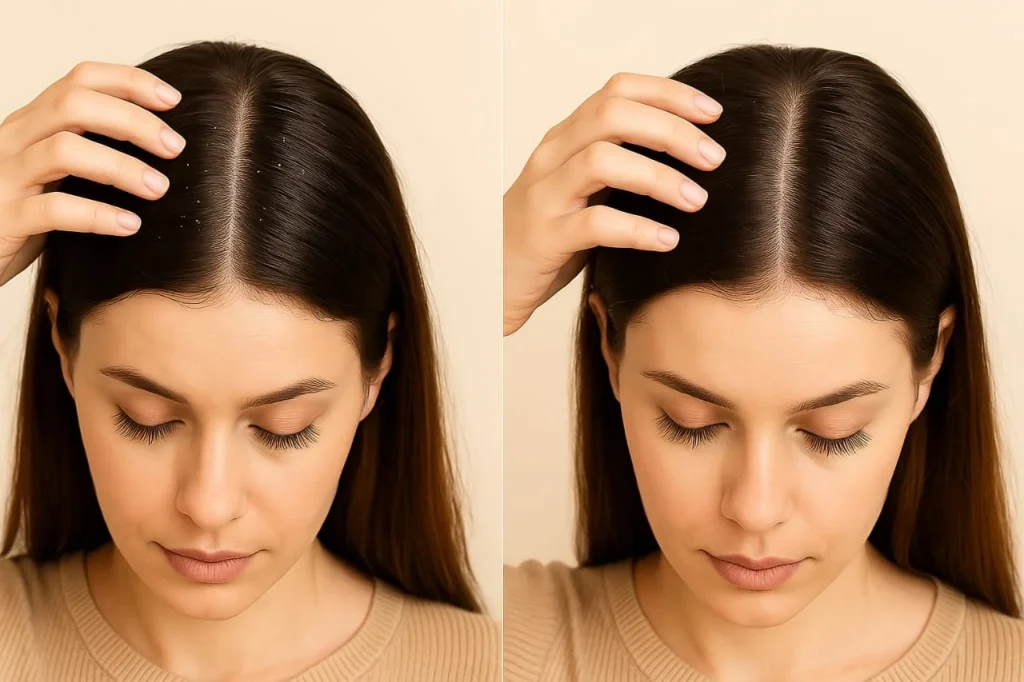
Flakes on your scalp don’t always mean dandruff.
Confused? You’re not alone.
Many people treat what they think is dandruff, only to see their condition worsen. At Skinzaar, we’ve treated thousands of scalps where the core issue wasn’t just flakes — but misdiagnosis.
So today, let’s break it down: Dandruff vs. Dry Scalp — how they differ, what causes them, and most importantly, what really works to heal your scalp.
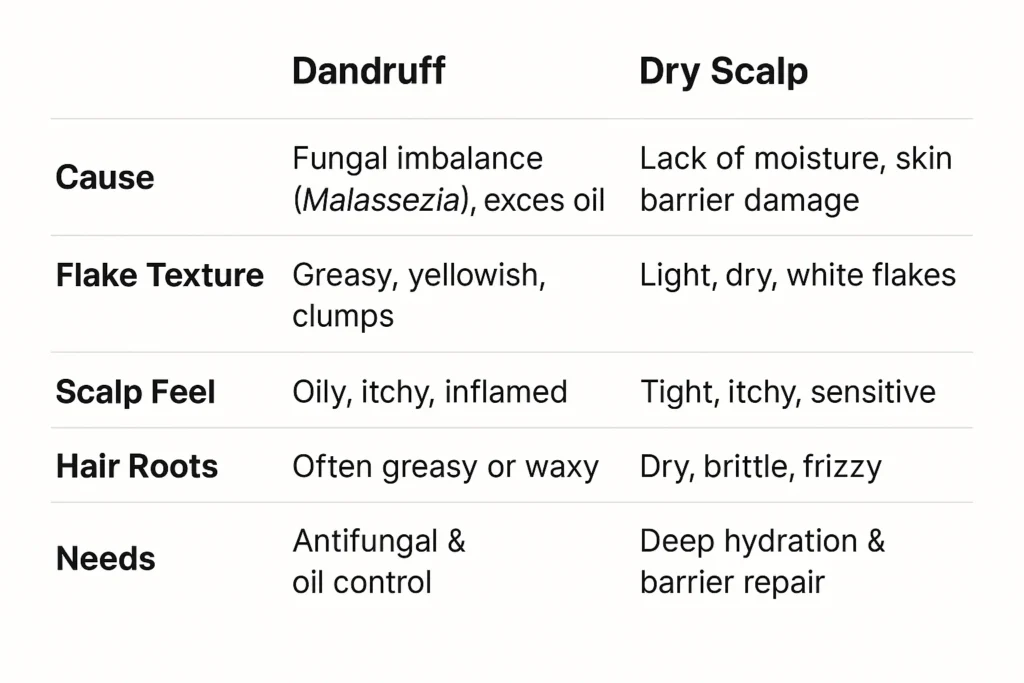
🔍 What’s the Difference Between Dandruff and Dry Scalp?
Though both can cause flaking, the root causes are very different — and so are their treatments.

⸻⸻⸻⸻⸻
🎯 Trichology Tip:
What Causes Each Condition?
Dry Scalp Causes:
•Harsh shampoos with sulfates or alcohol
•Seasonal dryness (cold weather, low humidity)
•Excessive washing or overuse of dry shampoo
•Dehydration and low water intake
•Lack of essential fatty acids, zinc, or vitamin E
Dandruff Causes (Especially Oily Dandruff):
How to Identify What You Have?
Run your fingers through your scalp mid-day:
•Feels tight, itchy, and flaky?
Probably dry scalp.
•Feels oily with sticky flakes?
That’s dandruff.
•Flaky and greasy at the same time?
You might have dry scalp dandruff — a combination of dryness at surface level with fungal or oily buildup underneath. It’s more common than you think — and we treat it a lot at Skinzaar.